


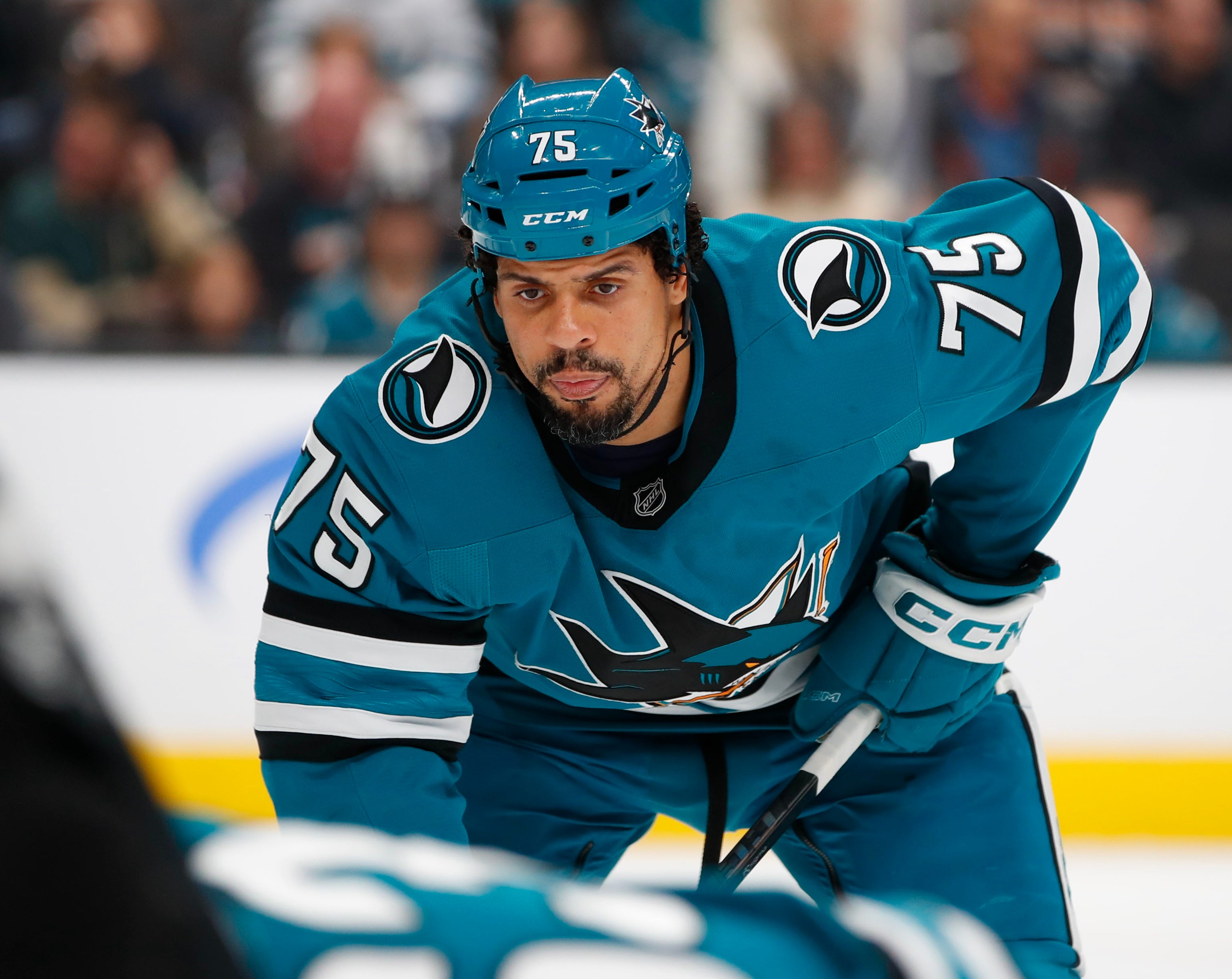
Journeyman NHL right wing/thug Ryan Reaves announced his retirement on Instagram the other day, bringing an end to his 16-season career. The Associated Press’s report on this development, which was picked up by dozens of other media outlets, began with an intriguingly uni-centric slant, as follows:
Enforcer Ryan Reaves said Wednesday he is retiring from hockey at age 39 after playing more than a decade and a half in the NHL, leaving just three players left who do not wear a visor.
Now that’s what I call a proper sense of journalistic priorities! If only every sports news item could lead with the story’s uni-related implications.
In case you’re wondering (as you should be): Hockey visor history is a bit sketchy, but research by the Society for Independent Hockey Research indicates that the first clear face shield was worn by Cariboo Hockey League player Kenneth William Clay in 1964, after he suffered an on-ice eye injury. A similar situation led Ontario Hockey Association player Kevin Neeld to create the “Neeld Shield” in 1973. Neeld eventually wore his visor while playing in the WHA, but the first player to wear a visor in the NHL appears to have been Islanders right wing Anders Kellur in 1979. An increasing number of NHL players began wearing the visor over the next few decades, until the league finally made visors mandatory for new players in 2013, with existing players grandfathered. Now that Reaves is hanging up his skates, the league’s last three visor-free holdouts are Predators center Ryan O’Reilly, Stars left wing Jamie Benn, and Wild defenseman Zach Bogosian.
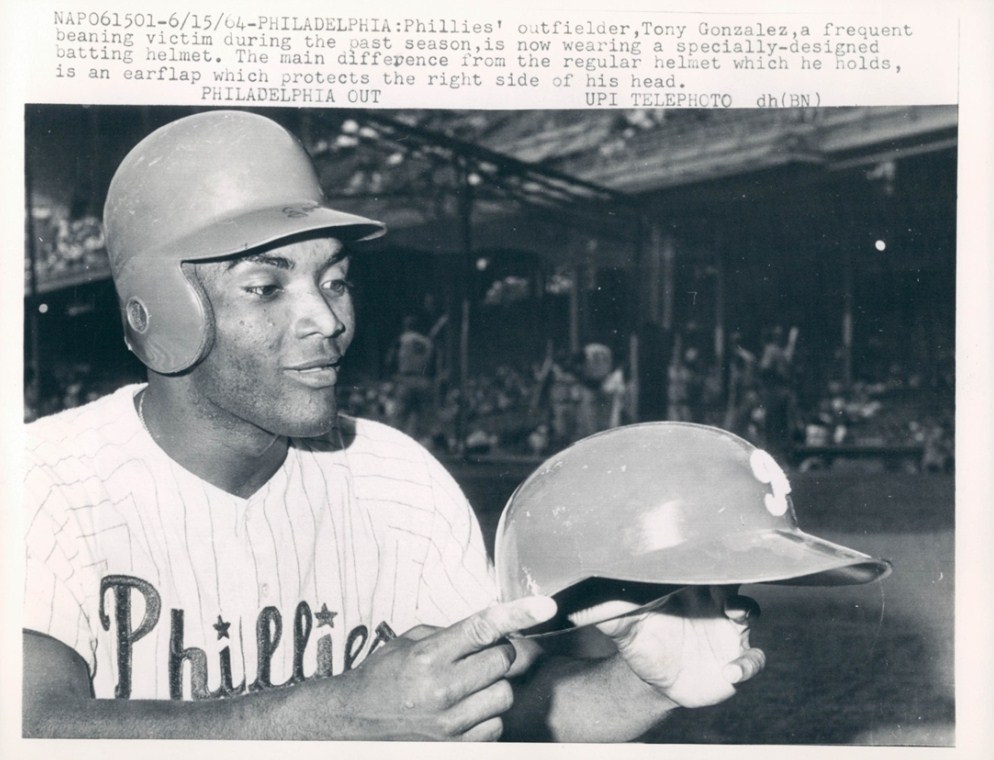
This same cycle — innovation, big league debut, gradual adoption, grandfathered mandate, and universal use after the final holdout either retires or joins in — can be observed for lots of other sports safety accessories. In Major League Baseball, for example, DIY batting helmet earflaps eventually led to the first true earflapped helmet in 1964. The flap gradually gained acceptance throughout the 1960s and ’70s and then became mandatory for new players in 1983. It initially appeared that the last grandfathered holdout was Red Sox DH Gary Gaetti, who retired in 2000, but then Tim Raines, who had retired in 1999, came out of retirement in 2001 and continued to play in 2002 before finally retiring for good, making him the final flap-free MLBer.
I’ve created a table showing how this cycle has played out for a bunch of different safety innovations in MLB, the NFL, and the NHL: